
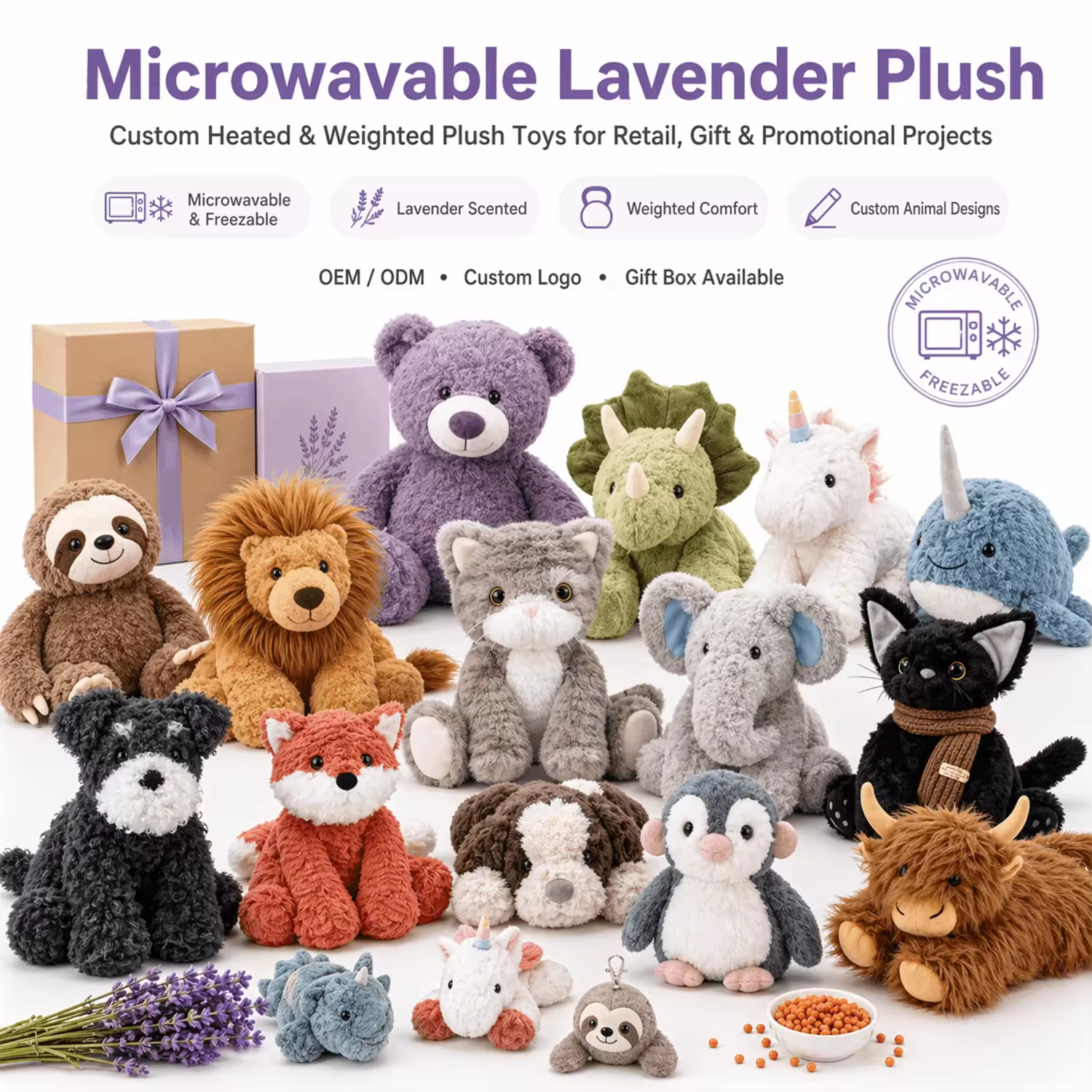
Weighted plush toys for anxiety are becoming one of the most interesting comfort product categories for retailers, gift brands, wellness shops, sensory product sellers, and private label buyers. As buyers, we are not only looking for a cute plush animal. We are looking for a product that feels soft, safe, premium, emotionally comforting, and easy to position in today’s growing wellness and self-care market.
A weighted plush toy is usually a soft stuffed animal or character filled with regular plush stuffing plus a weighted insert or weighted material, such as glass beads or plastic pellets. The added weight gives the toy a gentle, grounding feeling when held, placed on the lap, hugged, or used during rest time. Many customers describe the feeling as similar to a soft hug.
For B2B buyers, the real question is not only “What is a weighted plush toy?” The more important question is: “Can this product become a reliable, profitable, and repeatable item for my market?”
This guide explains what weighted plush toys for anxiety are, who buys them, how they are commonly designed, what specifications matter, and what buyers should check before starting a custom wholesale order.
What Are Weighted Plush Toys for Anxiety?
Weighted plush toys for anxiety are plush stuffed animals designed with extra weight to create a calming and grounding sensory experience. They are often used by people who enjoy soft touch, gentle pressure, and comforting objects during stressful moments, bedtime routines, study time, travel, or relaxation.
From a buyer’s point of view, the product sits between several growing categories:
| Category | Why It Matters for Buyers |
|---|---|
| Plush toys | Familiar, giftable, emotional, easy to customize |
| Wellness products | Connected to stress relief, self-care, sleep routines |
| Sensory products | Popular among children, adults, neurodivergent users, and therapy-related retail |
| Gift products | Suitable for birthdays, holidays, corporate gifting, care packages |
| Private label products | Strong potential for unique characters, packaging, and brand storytelling |
The keyword weighted plush toys for anxiety is usually searched by buyers who want products that are more meaningful than ordinary plush toys. They want something that can be marketed as comforting, calming, sensory-friendly, or sleep-supportive without making unsafe medical claims.
Current research around weighted blankets suggests they may help some users feel calmer or more relaxed, although evidence is still mixed and weighted products should not be promoted as medical treatments. A 2020 systematic review concluded that weighted blankets may be useful for reducing anxiety in some contexts, while evidence for insomnia was not strong enough; Cleveland Clinic also notes that weighted blankets may help some people, but the science remains limited. esponsible brands usually describe weighted plush toys as comfort products, sensory plush toys, calming plush animals, or self-care gifts, instead of claiming they can cure or treat anxiety.
Why Are Weighted Plush Toys Becoming Popular?
As buyers, we see demand growing because the product combines emotional value with practical use. A regular plush toy is cute. A weighted plush toy feels more purposeful.
Consumers are paying more attention to emotional wellness, sleep quality, anxiety management, sensory comfort, and meaningful gifts. Weighted plush toys fit naturally into these trends because they are easy to understand: soft plush plus gentle weight equals comfort.
Several buyer groups are showing interest in this category:
Retailers want differentiated plush products with higher perceived value.
Amazon and Shopify sellers want private label items with clear product positioning.
Gift brands want products that feel personal, caring, and emotionally warm.
Wellness brands want non-clinical comfort products for relaxation routines.
Children’s product buyers want soft sensory toys, but they must pay close attention to age grading and safety standards.
Corporate gifting companies may use weighted plush toys for employee wellness gifts, hospital care packages, university stress-relief campaigns, or mental health awareness events.
For wholesale buyers, the product is attractive because it is easy to customize by animal, size, weight, color, fabric, logo, hang tag, retail box, and brand story. A bear, sloth, dog, cat, dinosaur, bunny, frog, or custom mascot can all become a weighted plush toy if the structure is designed correctly.
How Do Weighted Plush Toys Work?
Weighted plush toys work by adding gentle pressure and a feeling of physical grounding. The weight is usually placed inside the body, belly, arms, legs, or a removable inner pouch. When the user holds the plush toy, the weight creates a stable and comforting feeling.
Most commercial weighted plush toys are inspired by the same general idea as weighted blankets: gentle pressure may help some users feel more relaxed. A 2024 review found that weighted blankets may improve sleep quality and reduce negative emotions in some groups, but this does not mean every weighted plush toy will have the same result for every user. eans product language should be careful. Instead of saying:
“This plush toy treats anxiety.”
A safer and more professional product description would be:
“Designed with gentle weight to provide a comforting, grounding feel during rest, travel, study, or relaxation.”
This type of wording is better for long-term brand safety, advertising compliance, and customer trust.
Who Buys Weighted Plush Toys for Anxiety?
Weighted plush toys for anxiety are not only for children. In many Western markets, adults are also buying plush toys as emotional comfort products, desk companions, sleep accessories, and self-care gifts.
Here are the main customer groups B2B buyers should consider.
1. Adults Looking for Comfort Products
Many adults buy weighted plush animals because they want something soft, calming, and easy to hold. Compared with a large weighted blanket, a weighted plush toy is smaller, more portable, and more giftable.
Popular adult use cases include:
| Use Case | Buyer Angle |
|---|---|
| Bedtime comfort | Sleep routine, relaxation gift |
| Work stress | Desk companion, office wellness |
| Travel anxiety | Portable comfort item |
| College students | Dorm room self-care product |
| Care packages | Emotional support gift |
| Holiday gifting | Premium plush gift category |
For this group, the design should not look too childish. Neutral colors, premium fabric, simple facial expressions, and soft weighted bodies usually perform better.
2. Parents Buying Sensory Plush Toys
Parents may buy weighted plush toys for children who enjoy sensory comfort. However, this category requires extra caution. Products for children must follow the correct toy safety standards for the target market, such as ASTM F963 and CPSIA in the United States, EN71 and CE in the European market, or other local regulations.
Buyers should also consider age labeling, choking hazard risks, seam strength, material safety, and whether the weighted filling is securely enclosed.
For younger children, especially babies and toddlers, weighted products require careful safety review and should not be casually marketed as sleep products. Responsible sourcing matters.
3. Therapy, Sensory, and Wellness Retailers
Some retailers focus on sensory tools, autism-friendly products, calming corners, occupational therapy supplies, or mental wellness items. These buyers care more about function, safety, washable structure, and weight distribution.
They may ask questions such as:
| Buyer Question | Why It Matters |
|---|---|
| Is the weighted insert removable? | Easier washing and safety control |
| Is the outer cover washable? | Important for repeated use |
| What is the weight range? | Different users prefer different pressure |
| Are the beads securely packed? | Safety and durability |
| Can you provide test reports? | Compliance and resale requirements |
| Can the product be fragrance-free? | Important for sensitive users |
For this market, simple and transparent product information is more persuasive than exaggerated marketing claims.
4. Private Label and E-commerce Sellers
Private label sellers are often interested in weighted plush toys because the product has strong differentiation. They can build a complete brand around comfort animals, bedtime companions, emotional support gifts, or stress-relief plush collections.
For these buyers, the most important sourcing points are:
- Unique character design
- Consistent fabric hand feel
- Stable weight and size
- Beautiful retail packaging
- Strong product photography potential
- Clear compliance documents
- Good profit margin after shipping
- Repeatable production quality
A successful private label weighted plush toy is not only a plush toy. It is a branded comfort experience.
Who Buys Weighted Plush Toys for Anxiety?
Weighted plush toys for anxiety are not only for children. In many Western markets, adults are also buying plush toys as emotional comfort products, desk companions, sleep accessories, and self-care gifts.
Here are the main customer groups B2B buyers should consider.
1. Adults Looking for Comfort Products
Many adults buy weighted plush animals because they want something soft, calming, and easy to hold. Compared with a large weighted blanket, a weighted plush toy is smaller, more portable, and more giftable.
Popular adult use cases include:
| Use Case | Buyer Angle |
|---|---|
| Bedtime comfort | Sleep routine, relaxation gift |
| Work stress | Desk companion, office wellness |
| Travel anxiety | Portable comfort item |
| College students | Dorm room self-care product |
| Care packages | Emotional support gift |
| Holiday gifting | Premium plush gift category |
For this group, the design should not look too childish. Neutral colors, premium fabric, simple facial expressions, and soft weighted bodies usually perform better.
2. Parents Buying Sensory Plush Toys
Parents may buy weighted plush toys for children who enjoy sensory comfort. However, this category requires extra caution. Products for children must follow the correct toy safety standards for the target market, such as ASTM F963 and CPSIA in the United States, EN71 and CE in the European market, or other local regulations.
Buyers should also consider age labeling, choking hazard risks, seam strength, material safety, and whether the weighted filling is securely enclosed.
For younger children, especially babies and toddlers, weighted products require careful safety review and should not be casually marketed as sleep products. Responsible sourcing matters.
3. Therapy, Sensory, and Wellness Retailers
Some retailers focus on sensory tools, autism-friendly products, calming corners, occupational therapy supplies, or mental wellness items. These buyers care more about function, safety, washable structure, and weight distribution.
They may ask questions such as:
| Buyer Question | Why It Matters |
|---|---|
| Is the weighted insert removable? | Easier washing and safety control |
| Is the outer cover washable? | Important for repeated use |
| What is the weight range? | Different users prefer different pressure |
| Are the beads securely packed? | Safety and durability |
| Can you provide test reports? | Compliance and resale requirements |
| Can the product be fragrance-free? | Important for sensitive users |
For this market, simple and transparent product information is more persuasive than exaggerated marketing claims.
4. Private Label and E-commerce Sellers
Private label sellers are often interested in weighted plush toys because the product has strong differentiation. They can build a complete brand around comfort animals, bedtime companions, emotional support gifts, or stress-relief plush collections.
For these buyers, the most important sourcing points are:
- Unique character design
- Consistent fabric hand feel
- Stable weight and size
- Beautiful retail packaging
- Strong product photography potential
- Clear compliance documents
- Good profit margin after shipping
- Repeatable production quality
A successful private label weighted plush toy is not only a plush toy. It is a branded comfort experience.
Common Sizes and Weights for Weighted Plush Toys
Size and weight are two of the most important decisions in development. If the plush toy is too small, it may not provide enough weighted feeling. If it is too heavy, it may feel uncomfortable, expensive to ship, or unsuitable for some users.
Below is a practical reference for buyers.
| Plush Size | Common Weight Range | Best For |
|---|---|---|
| 20–25 cm | 0.3–0.6 kg | Small gifts, kids’ sensory plush, travel |
| 30–35 cm | 0.6–1.0 kg | General retail, Amazon, adult comfort gifts |
| 40–45 cm | 1.0–1.5 kg | Premium weighted plush animals |
| 50–65 cm | 1.5–2.5 kg | Large comfort plush, higher retail price |
| 70 cm+ | Custom evaluation needed | Oversized display, specialty projects |
For B2B buyers, the best-selling range is often 30–45 cm because it balances comfort, cost, shipping volume, and retail shelf appeal.
A 30 cm weighted plush toy can be easy to hold and ship. A 45 cm weighted plush toy feels more premium and giftable. Larger sizes can work well, but freight cost and carton volume must be calculated early.
What Materials Are Used in Weighted Plush Toys?
Material choice has a direct impact on perceived value. For anxiety-related comfort products, customers expect softness first. The plush must feel pleasant against the skin.
Common outer fabrics include:
| Fabric Type | Features |
|---|---|
| Super soft plush | Smooth, affordable, widely used |
| Minky fabric | Soft, short pile, baby-product feel |
| Rabbit fur style plush | Premium hand feel, good for luxury comfort plush |
| Sherpa fleece | Warm, cozy, winter gift positioning |
| Crystal super soft fabric | Smooth, bright color, cost-effective |
| Stretch plush | Good for squishy, marshmallow-like designs |
For filling, weighted plush toys usually combine:
- Polyester fiberfill
- Glass beads
- Plastic pellets
- Inner weighted pouch
- Compartment stitching
- Optional removable insert
Glass beads are popular because they are small, smooth, and can provide a stable weight. Plastic pellets may be lighter and more cost-effective, depending on the design. For higher-end products, a removable weighted insert is often preferred because it makes washing easier.
Removable Weighted Insert vs. Fixed Weighted Filling
One key sourcing decision is whether the weighted filling should be removable or fixed inside the plush.
Removable Weighted Insert
A removable weighted insert is usually placed inside the plush body through a zipper or hidden opening. The outer cover can be washed separately.
Advantages:
- Easier to wash
- Better for premium retail positioning
- Weight can be controlled more clearly
- Useful for warm/cold insert designs
- More professional for wellness markets
Disadvantages:
- Higher production cost
- Requires zipper or closure design
- More complex quality inspection
- May require stronger inner pouch construction
Fixed Weighted Filling
Fixed weighted filling means the beads or pellets are sewn permanently inside the plush toy.
Advantages:
- Lower cost
- Simpler production
- No removable part to lose
- Suitable for standard plush retail
Disadvantages:
- Harder to wash
- Less flexible
- Requires excellent sewing quality
- Not ideal for all premium markets
For buyers targeting Europe, North America, wellness retail, or private label brands, a removable inner weighted pouch is often the better long-term option.
Safety and Compliance: What Buyers Should Check
Weighted plush toys must be developed carefully because they combine soft toy construction with weighted material. For B2B buyers, safety is not optional. It affects customs clearance, retail approval, customer trust, and long-term brand risk.
Depending on your target market, common compliance requirements may include:
| Market | Common Standards |
|---|---|
| United States | ASTM F963, CPSIA, CPC |
| European Union | EN71, CE, REACH |
| United Kingdom | UKCA, EN71-related requirements |
| Canada | CCPSA-related requirements |
| Australia/New Zealand | AS/NZS ISO 8124 |
Buyers should confirm with their importer, compliance consultant, or local testing lab before mass production.
Important product checks include:
- Seam strength
- Fabric safety
- Color fastness
- Small parts risk
- Bead leakage prevention
- Age grading
- Flammability requirements
- Labeling requirements
- Packaging warning text
- Wash care label
- Batch traceability
A reliable weighted plush toy supplier should be able to discuss these issues before production, not after problems happen.
How to Position Weighted Plush Toys Without Medical Claims
Because the keyword includes “anxiety,” many sellers are tempted to use strong claims. This can create risk.
As buyers, we should avoid product language like:
- “Cures anxiety”
- “Treats insomnia”
- “Guaranteed to reduce stress”
- “Medical therapy plush toy”
- “Doctor-approved anxiety treatment”
Safer product positioning includes:
- “Designed for calming comfort”
- “Gentle weighted plush for relaxation”
- “Soft sensory plush companion”
- “Comforting plush animal for rest time”
- “A thoughtful self-care gift”
- “Grounding plush toy for quiet moments”
This language is still emotionally strong, but it is more responsible and more suitable for long-term retail.
Best Animals and Designs for Weighted Plush Toys
Animal choice matters because weighted plush toys are emotional products. The design should feel calm, soft, and easy to connect with.
Popular weighted plush animal styles include:
| Animal | Market Positioning |
|---|---|
| Bear | Classic comfort, safe choice |
| Sloth | Slow, calm, relaxation theme |
| Bunny | Soft, gentle, giftable |
| Dog | Emotional support, loyal companion |
| Cat | Cozy, home comfort |
| Dinosaur | Kids and young adults |
| Cow | Cute, trendy, social media friendly |
| Frog | Playful, Gen Z appeal |
| Koala | Sleepy, cuddly, premium |
| Capybara | Trend-driven, calming character |
For anxiety-related products, facial expression is important. Buyers should consider soft eyes, gentle smiles, relaxed body shapes, and calming colors. Overly bright colors or aggressive expressions may not match the product purpose.
Neutral tones such as beige, brown, cream, grey, sage green, dusty pink, lavender, and soft blue often work well for Western wellness markets.
Packaging Options for Wholesale Buyers
Packaging can strongly influence retail price. A weighted plush toy without packaging may look like a normal plush toy. With the right packaging, it becomes a premium comfort gift.
Common packaging options include:
| Packaging Type | Best For |
|---|---|
| OPP bag | Basic wholesale, low cost |
| Hang tag | Retail shelves, brand storytelling |
| Cotton drawstring bag | Gift positioning, eco-friendly feel |
| Color box | Premium e-commerce, Amazon |
| Window box | Retail display |
| Gift box | Holiday and wellness gift sets |
| Vacuum packing | Freight saving, bulk shipping |
For private label buyers, a hang tag is highly recommended. It can explain the product concept, fabric, weight, care instructions, brand story, and safety information.
A simple message such as “A soft weighted friend for calm moments” can make the product feel much more valuable.
What Should Buyers Ask Before Ordering?
Before starting a weighted plush toy order, buyers should ask the supplier detailed questions. This helps avoid misunderstanding and protects the project timeline.
Here is a practical buyer checklist:
| Question | Why It Matters |
|---|---|
| What size do you recommend for my target weight? | Weight and size must match |
| Is the weighted insert removable? | Affects washing and cost |
| What weighted material do you use? | Glass beads, plastic pellets, or other |
| Can the weight be distributed evenly? | Improves comfort |
| Can you make inner compartments? | Prevents beads from shifting |
| Is the outer cover washable? | Important for long-term use |
| What fabric options are available? | Determines hand feel and price |
| What is the MOQ per design? | Affects budget |
| What is the sample cost and sample time? | Important for launch planning |
| What test reports can be arranged? | Required for compliance |
| Can you support custom packaging? | Helps brand building |
| What is the carton size and CBM? | Needed for freight calculation |
A professional supplier should answer these questions clearly and help buyers balance cost, quality, and market positioning.
OEM and ODM Options for Weighted Plush Toys
Custom weighted plush toys can be developed in several ways.
1. Existing Style + Custom Logo
This is the easiest option. Buyers choose an existing plush shape and add a logo, hang tag, woven label, or packaging.
Best for:
- Small test orders
- Faster launch
- Lower development risk
- New buyers testing the market
2. Existing Style + Custom Fabric or Color
This option keeps the basic shape but changes the fabric, color, expression, or accessories.
Best for:
- Private label sellers
- Retailers wanting differentiation
- Seasonal collections
3. Fully Custom Character
A fully custom weighted plush toy is developed from artwork, brand mascot, IP character, or reference images.
Best for:
- Brand owners
- Influencers
- Game companies
- Corporate mascots
- Premium retail products
This option requires more communication, sampling, and design adjustment, but it creates the strongest brand protection and long-term value.
How Much Do Weighted Plush Toys Cost Wholesale?
The wholesale price depends on size, weight, fabric, design complexity, embroidery, packaging, certification requirements, and order quantity.
Main cost factors include:
- Plush size
- Total weight
- Type of weighted filling
- Removable insert or fixed filling
- Fabric cost
- Embroidery complexity
- Accessories
- Inner pouch construction
- Packaging
- Testing and certification
- Shipping volume
For buyers, the cheapest option is not always the best option. A weighted plush toy with poor seams, uneven filling, rough fabric, or bead leakage risk can damage a brand quickly.
The better approach is to define the target market first:
| Market Level | Suggested Product Direction |
|---|---|
| Budget retail | Simple design, fixed weight, OPP bag |
| Mid-range e-commerce | Soft fabric, good embroidery, hang tag |
| Premium wellness gift | Removable insert, washable cover, gift box |
| Sensory retail | Clear safety details, durable sewing, compliance support |
| Corporate gifting | Custom logo, brand colors, gift packaging |
Once the market level is clear, the supplier can recommend the most suitable structure.
Common Mistakes Buyers Should Avoid
Mistake 1: Choosing Weight Before Size
Weight must match the plush size. If buyers request too much weight in a small toy, the product may feel hard, bulky, or uncomfortable.
Mistake 2: Ignoring Shipping Cost
Weighted plush toys are heavier than regular plush toys. Freight cost can affect profit margin, especially for air shipping. Buyers should ask for carton size, gross weight, and CBM before confirming the final price.
Mistake 3: Making Strong Medical Claims
Marketing a plush toy as an anxiety treatment can create compliance risk. Use comfort-focused language instead.
Mistake 4: Using Low-Quality Fabric
The first thing customers feel is the fabric. If the plush does not feel soft, the weighted function will not save the product.
Mistake 5: Skipping Sample Testing
For weighted plush toys, samples are important. Buyers should check weight, softness, bead distribution, sewing strength, facial expression, fabric color, and packaging before mass production.
What Makes a Good Weighted Plush Toy Supplier?
A good supplier should not only quote a price. They should help buyers turn an idea into a safe, sellable product.
Look for a supplier who can support:
- OEM and ODM development
- Fabric selection
- Weight recommendation
- Inner pouch design
- Embroidery and logo customization
- Custom hang tags and packaging
- Sample development
- Mass production quality control
- Export carton planning
- Compliance testing support
- Communication before and after production
For B2B buyers, communication is part of product quality. A supplier who asks the right questions early can prevent expensive mistakes later.
FAQ: Weighted Plush Toys for Anxiety
Are weighted plush toys for anxiety medical products?
No. Most weighted plush toys are consumer comfort products, not medical devices. They should be marketed as calming, comforting, or sensory-friendly plush toys, not as products that diagnose, treat, or cure anxiety.
What is the best size for a weighted plush toy?
For most retail and e-commerce buyers, 30–45 cm is a practical size range. It offers enough space for weighted filling while keeping shipping cost manageable.
What filling is used in weighted plush toys?
Common filling includes polyester fiberfill plus glass beads or plastic pellets. Premium designs may use a removable inner weighted pouch.
Can weighted plush toys be washed?
It depends on the structure. If the toy has a removable weighted insert, the outer cover may be washable. If the weighted filling is fixed inside, washing may be limited. Buyers should confirm wash instructions during product development.
Can I customize the animal, color, logo, and packaging?
Yes. Most OEM plush manufacturers can customize animal shape, fabric, color, embroidery, woven labels, hang tags, retail boxes, gift bags, and care labels.
What safety standards are needed?
It depends on the selling market. Common standards include ASTM F963 and CPSIA for the US market, EN71 and CE for the EU market, and other local toy safety requirements.
Are weighted plush toys suitable for children?
They can be designed for children, but buyers must confirm age grading, safety testing, weight level, labeling, and local compliance requirements. Extra caution is needed for younger children.
What MOQ is common for custom weighted plush toys?
MOQ depends on the supplier and design complexity. For fully custom plush toys, many factories require 300–500 pieces per design or higher. Existing styles may allow smaller trial orders.